Unlock Crop Price Forecasting

Published: April 25, 2023
Crop price forecasting is a critical tool for farmers, traders, and other market participants to make informed decisions about buying, selling, and hedging crops. Machine Learning (ML) forecasting methodologies are being used to provide accurate and reliable crop price predictions. But what exactly is ML, and how does it improve crop price forecasting?
*Please note that this abridged version only scratches the surface of the extensive modeling techniques discussed in the full article. To delve deeper into the intricacies of ML crop modeling, download the full article using the following link.
The Power of Machine Learning in Crop Price Forecasting:
ML techniques in time-series forecasting are a powerful complement and/or substitute for traditional supply and demand (S&D) equilibrium modeling. As opposed to annual marketing year data that has been aggregated up to national or global levels common in S&D modeling, time-series data provides frequent indicators of the conditions of markets. This becomes particularly useful when making frequent purchasing/hedging decisions over relatively short periods - think 2-24 weeks. As opposed to standard time-series or regression analysis, ML has the added benefit of reviewing large combinations of variables while removing the subjective nature of variable selection from the analyst. This is particularly helpful in agricultural markets when there are multiple variables and production lags to consider.
Why Machine Learning over standard approaches?
One of the key challenges with time-series forecasting is selecting the right variables for the most accurate prediction. While knowledgeable analysts can address this issue of variable selection by drawing on their experience and understanding of markets, ML serves as an added tool that can evaluate a much larger pool of candidate variables, as well as their lags.
To see how this can be helpful, consider predicting the price of soybeans. One frequently talked about relationship within soybean markets that is routinely suggested as a leading indicator is the soybean crush margin, or (crudely) the profit a processor earns after parsing out soybean byproducts (fig.1).
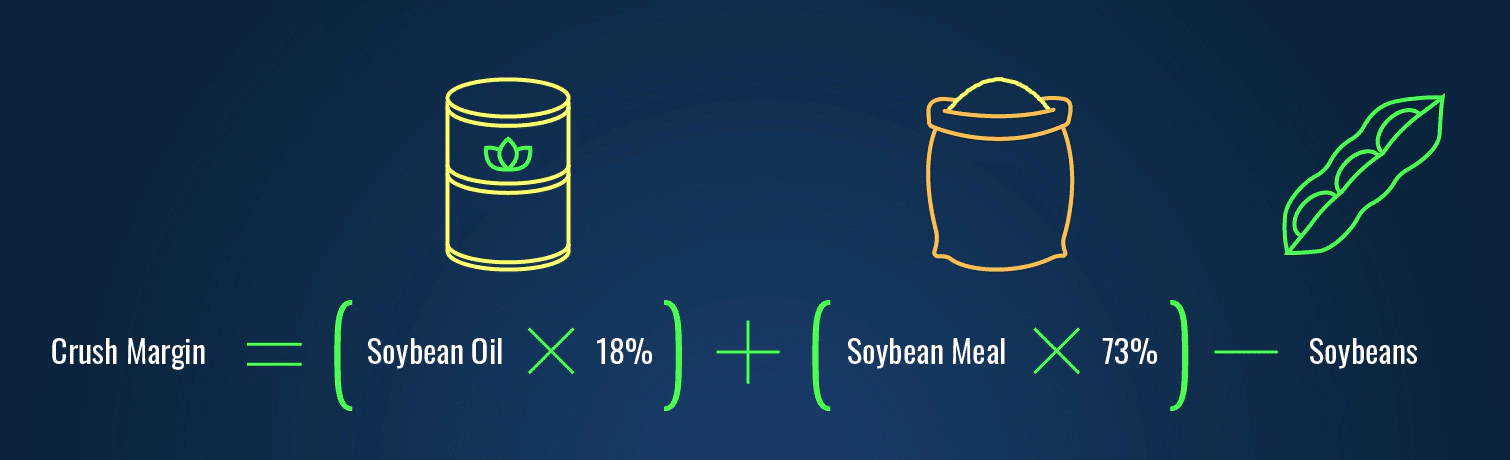 Figure 1 - The formula to calculate the soybean crush margin.
An analyst could try to predict soybean prices next week by including the crush margin as a variable. While it clearly holds an economic relationship within soybean markets, and it would be explanatory in a regression sense, it ends up actually being poor for prediction because crush margins are caused by the same factors that shift soybean prices (fig.1).
ML can be used to uncover this tradeoff between explainability and predictability, as well as review relationships across a large combination of variables. ML tools are frequently used when the number of variable combinations is too large for an individual to assess. By automating variable selection and incorporating out-of-sample forecast errors, ML optimizations ensure that the crop price forecasts are robust and adaptable to market changes.
Conclusion:
ML forecasting methodologies provide a powerful tool for crop price forecasting by leveraging time-series data and automating variable selection. ML techniques can supplement traditional S&D equilibrium modeling by looking at more frequently reported data. ML optimizations improve the accuracy and reliability of crop price forecasting, assisting farmers, traders, and other market participants in making informed decisions in the dynamic and complex agricultural markets.
In the second part of this series, we will explore the value of S&D modeling and how it can further enhance crop price forecasting.
Author’s Note:
We hope you enjoyed this article. Note that this is an abridged version of a more in depth article Unlock Crop Price Forecasting with DecisionNext - Part 1 by Dr. David Boussious, which provides a more comprehensive understanding of advanced modeling techniques and how DecisionNext empowers its customers to stay ahead of the curve by leveraging ML models.
If you have questions about how your team can leverage ML crop modeling to enhance forecasting accuracy and drive better business decisions, click below to contact us and schedule a meeting.
Please enter your email to view the full version of this article
[gravityform id=“16” title=“false” description=“false”]